Your Ultimate Guide to Stocks & Global Markets
Inflation
Why yesterday’s €10 doesn't buy the same today
5/7/2026
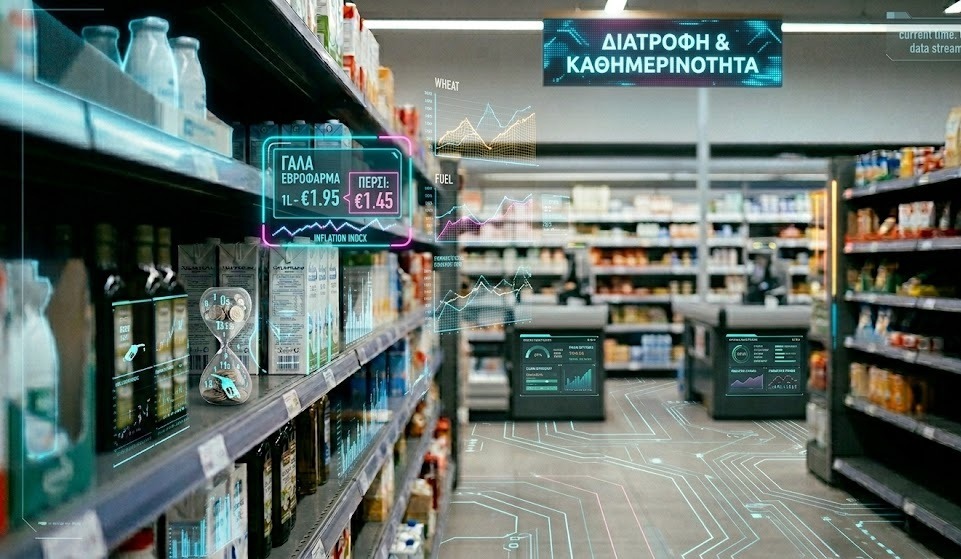
If you have noticed that your trip to the supermarket is becoming increasingly expensive or that your favorite product costs more than it did last year, then you have already felt the impact of inflation. Although it is a term that dominates financial news, its essence is simple and affects the daily lives of us all.
What is inflation, really?
In simple terms, inflation is the generalized and continuous increase in the prices of goods and services within an economy. When prices rise, the value of money decreases. This means that with the same amount of money, you can buy fewer things than you could in the past. Essentially, inflation doesn’t show that products suddenly became rarer or more valuable, but that the currency itself has lost part of its purchasing power.
Why do prices rise?
Inflation does not happen by chance. It is usually driven by three main factors. First, there is "demand-pull" inflation, which occurs when consumers want to buy more products than the market can produce. When demand exceeds supply, prices inevitably rise.
Secondly, we have "cost-push" inflation. This happens when the production costs for businesses increase—for example, if electricity, fuel, or raw materials become more expensive. To maintain their profit margins, companies pass these costs on to the final consumer, increasing the prices on the shelves. Finally, the excessive printing and circulation of money by central banks can also lead to a decrease in its value, causing inflationary pressures.
Is inflation always a bad thing?
Although the word has a negative connotation, economists argue that low and stable inflation (usually around 2%) is a sign of a healthy economy. When prices rise slightly, consumers are encouraged to buy now rather than wait, which keeps the economy moving.
The problem becomes serious when inflation spirals out of control or when it rises much faster than workers' wages. In such cases, the standard of living for citizens declines, as their savings lose value and basic goods become unaffordable.
How is it measured?
To understand how fast inflation is running, statistical agencies use the so-called "Consumer Price Index" (CPI). Imagine a hypothetical basket that contains everything: from bread and milk to electricity bills and cinema tickets. Every month, they compare the total cost of this basket with the previous month or the previous year, thereby calculating the percentage of the increase.
In summary, inflation is an invisible tax that reduces the value of the money in our pockets. Understanding how it works is the first step toward being able to manage our finances better in a constantly changing environment.

Capital at Risk. Investing involves risk. The content of this site is for informational and educational purposes only and does not constitute investment advice.
Copyright © 2026 AevumX Capital | All rights reserved.