Your Ultimate Guide to Stocks & Global Markets
Commodities
Exactly What They Are
3/20/2026
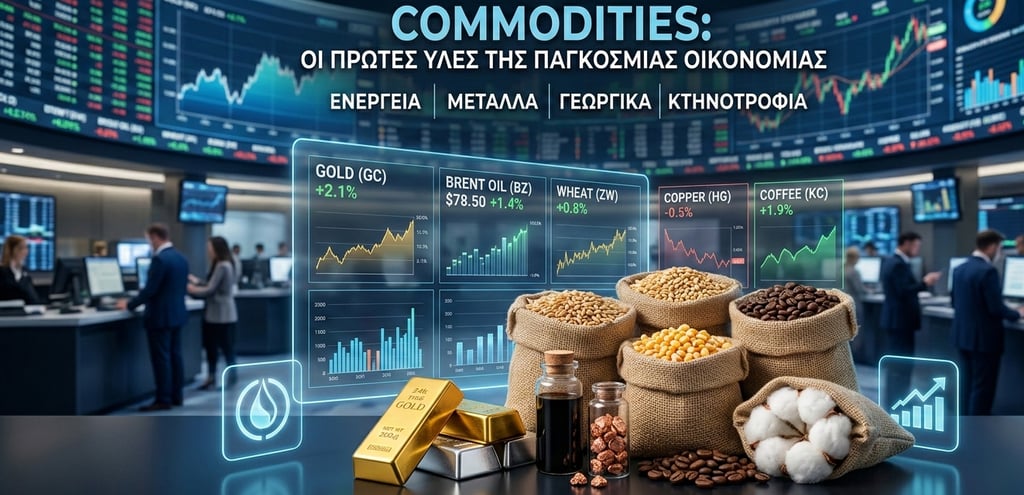
Commodities are one of the oldest and most fascinating investment categories. While stocks represent ownership in a company, commodities are the raw materials that fuel the global economy.
In the world of investing, a commodity is a basic good used in commerce that is interchangeable with other goods of the same type. This means that crude oil extracted in Saudi Arabia has the same value and specifications as crude oil extracted in Texas.
The 4 Main Categories
Commodities are typically divided into two broad groups: Hard (those that are mined or extracted) and Soft (those that are grown or reared).
Energy: Crude Oil, Natural Gas, Gasoline.
Metals: Gold, Silver, Copper, Lithium (critical for batteries).
Agricultural Products (Softs): Wheat, Corn, Coffee, Sugar.
Livestock: Live cattle, lean hogs.
How Does the Market Work?
In the stock market, commodities aren't always traded in their physical form (you won't have barrels of oil delivered to your doorstep!). Trading happens primarily through:
Futures Contracts: These are agreements to buy or sell a specific quantity of a commodity at a predetermined price on a future date.
Hedging: Producers (e.g., farmers) use commodities to "lock in" a price and protect themselves from a potential price drop.
Speculation: Investors bet on the rise or fall of prices based on global supply and demand.
Why Invest in Commodities?
Investors turn to commodities for three primary reasons:
Inflation Hedge: When the prices of goods on the shelves go up, the prices of raw materials usually rise as well. Commodities tend to maintain their purchasing power.
Diversification: Commodity prices often move independently of stocks. If the stock market is crashing, Gold may rise (acting as a "safe haven").
Geopolitics: It is the most direct way to invest in global developments (e.g., energy shortages due to international conflict).
How Can You Get Started?
You don't need to buy a warehouse. Modern methods include:
ETFs (Exchange Traded Funds): Funds that trade like stocks and track the price of a commodity (e.g., a Gold ETF).
Company Stocks: Investing in gold mining companies or oil giants.
CFDs (Contracts for Difference): These allow for speculation without owning the actual asset (high risk).
Caution: Commodities are considered high-volatility investments. A sudden change in weather or a political decision can shift their price within minutes.
Capital at Risk. Investing involves risk. The content of this site is for informational and educational purposes only and does not constitute investment advice.
Copyright © 2026 AevumX Capital | All rights reserved.